
Enterprise • Low-Code Platform
RCP
Designing a unified Portfolio & Project Management ecosystem within the constraints of a low-code enterprise platform.
RCP connects portfolios, programs, projects, risks, benefits, finance, resources and reporting into one consistent operational experience for enterprise organizations.
PROJECT OVERVIEW
Making multiple enterprise modules feel like one product.
RCP began with only a business vision—not a complete product specification. The client had limited documentation, so our team conducted extensive research, stakeholder workshops and workflow mapping to transform fragmented ideas into a scalable enterprise platform.
THE CHALLENGE
Designing with tied hands.
Unlike traditional product design, RCP wasn't built with unlimited creative freedom. Every screen had to live inside a predefined low-code ecosystem where layouts, components and interactions were heavily constrained. The real challenge was creating exceptional usability within strict technical boundaries.
Low-Code Constraints
Limited customization forced every UX decision to balance usability with platform feasibility.
Incomplete Requirements
The client provided only a starting point, requiring extensive discovery and requirement gathering.
Complex Information
More than 12 operational modules needed one consistent information architecture.
Design System First
Every experience extended Brane's design system instead of reinventing components.
MY APPROACH
From discovery to enterprise execution.
Research
Studied enterprise workflows and identified operational pain points across project management.
Workshops
Collaborated with business analysts and stakeholders to define scalable product architecture.
System UX
Extended Brane's design system with reusable enterprise components across multiple modules.
Validation
Optimized every interaction for both user experience and low-code implementation.
LANDING EXPERIENCE
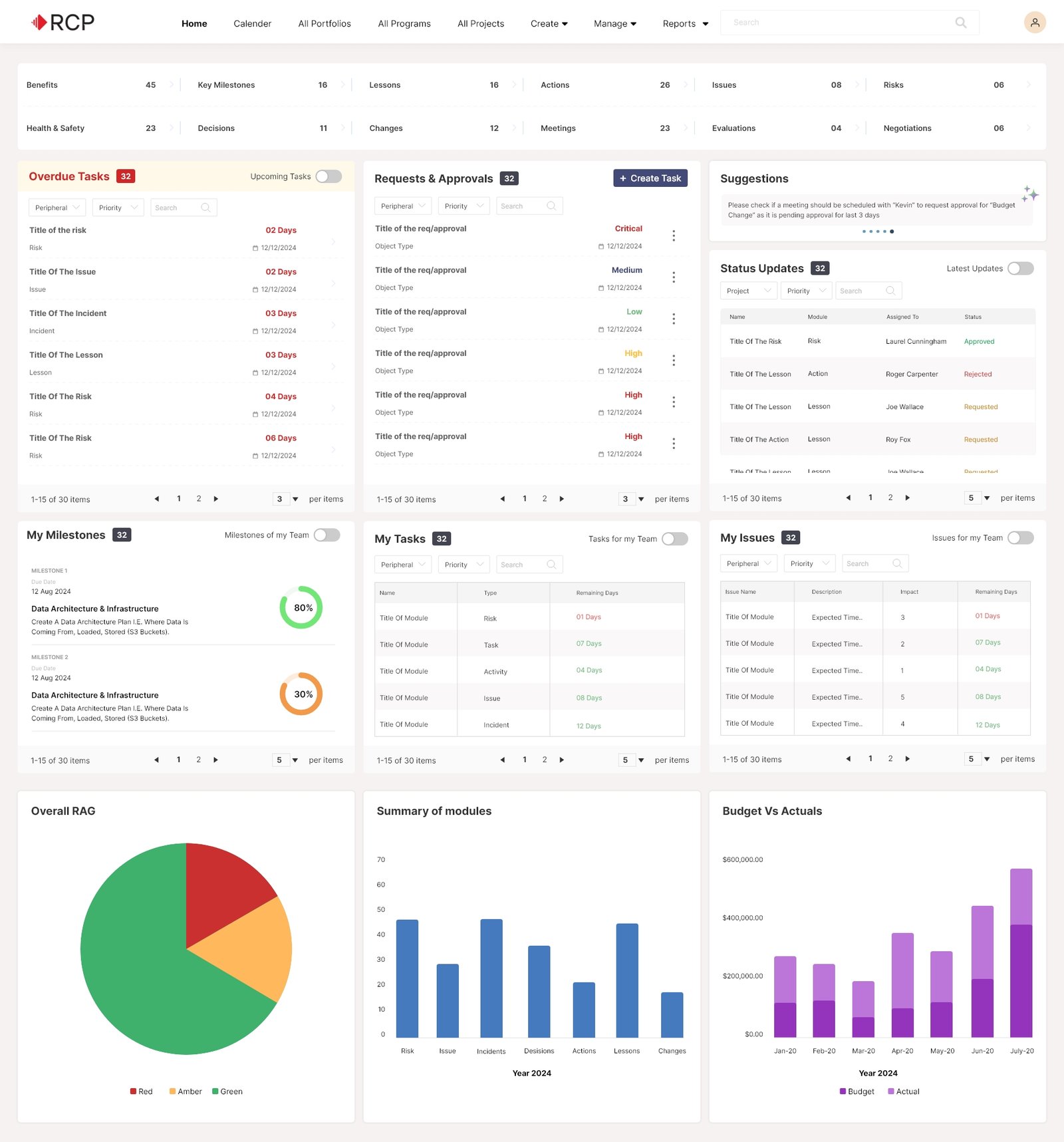
Enterprise dashboard for executive visibility.
A consolidated dashboard combining budgets, RAG health, geographical insights and enterprise-wide operational metrics without overwhelming decision makers.
PORTFOLIO MANAGEMENT
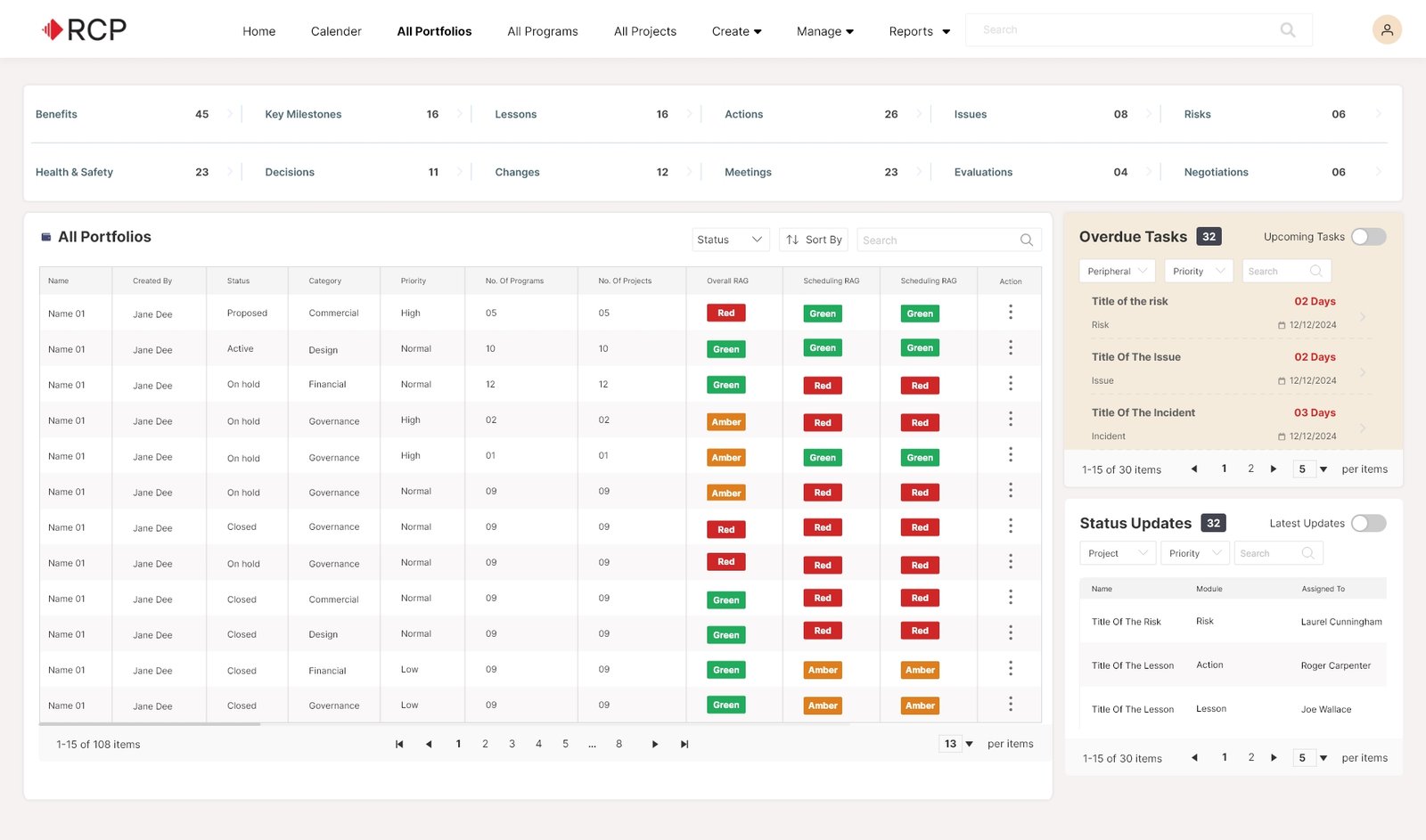
Managing hundreds of portfolios with clarity.
A scalable overview allowing executives to monitor project health, scheduling status and operational performance across organizations.
PROJECT DETAILS
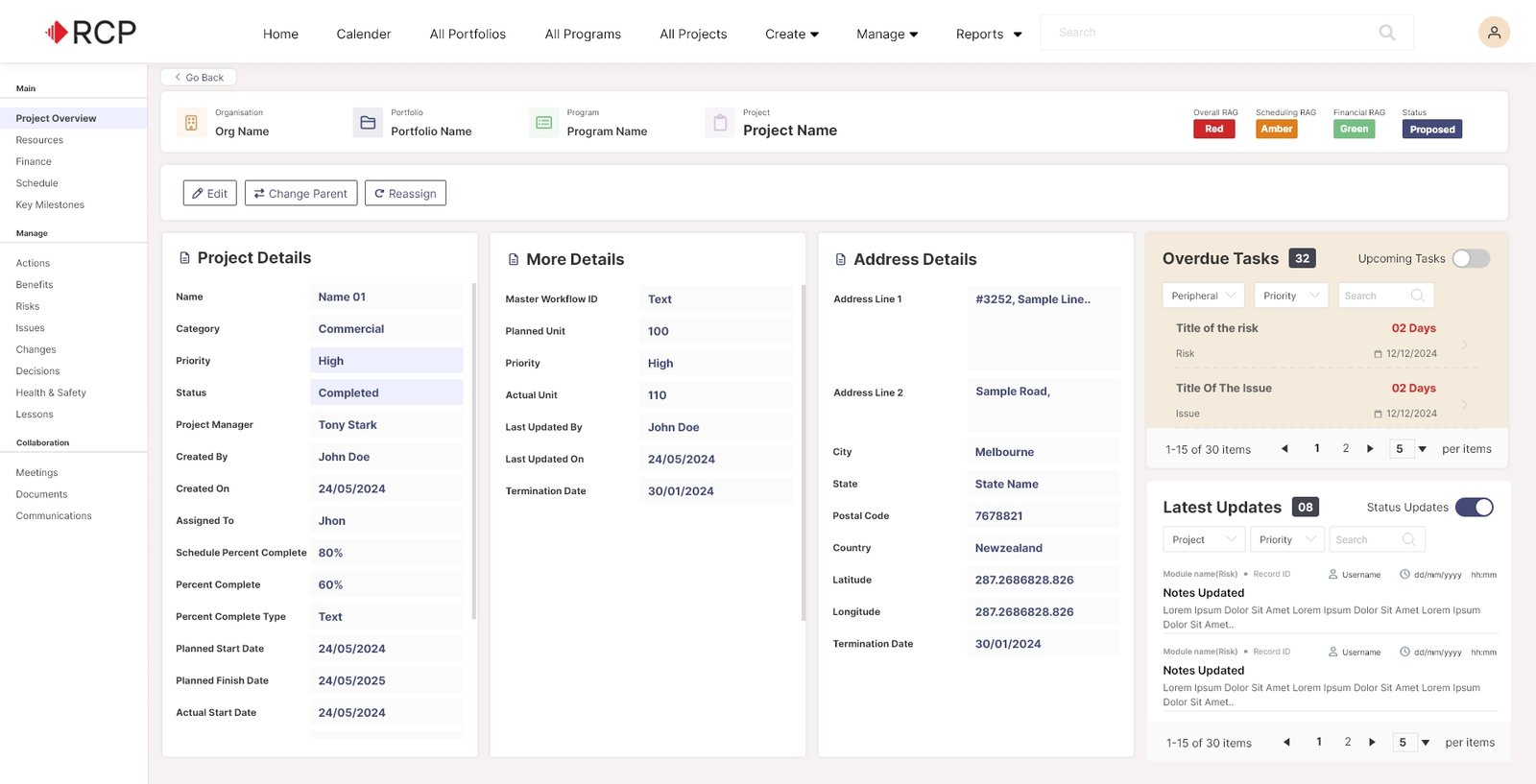
Structured information without cognitive overload.
Organization, finance, project metadata, address details, overdue tasks and status updates are unified into one operational workspace.
BENEFITS MODULE
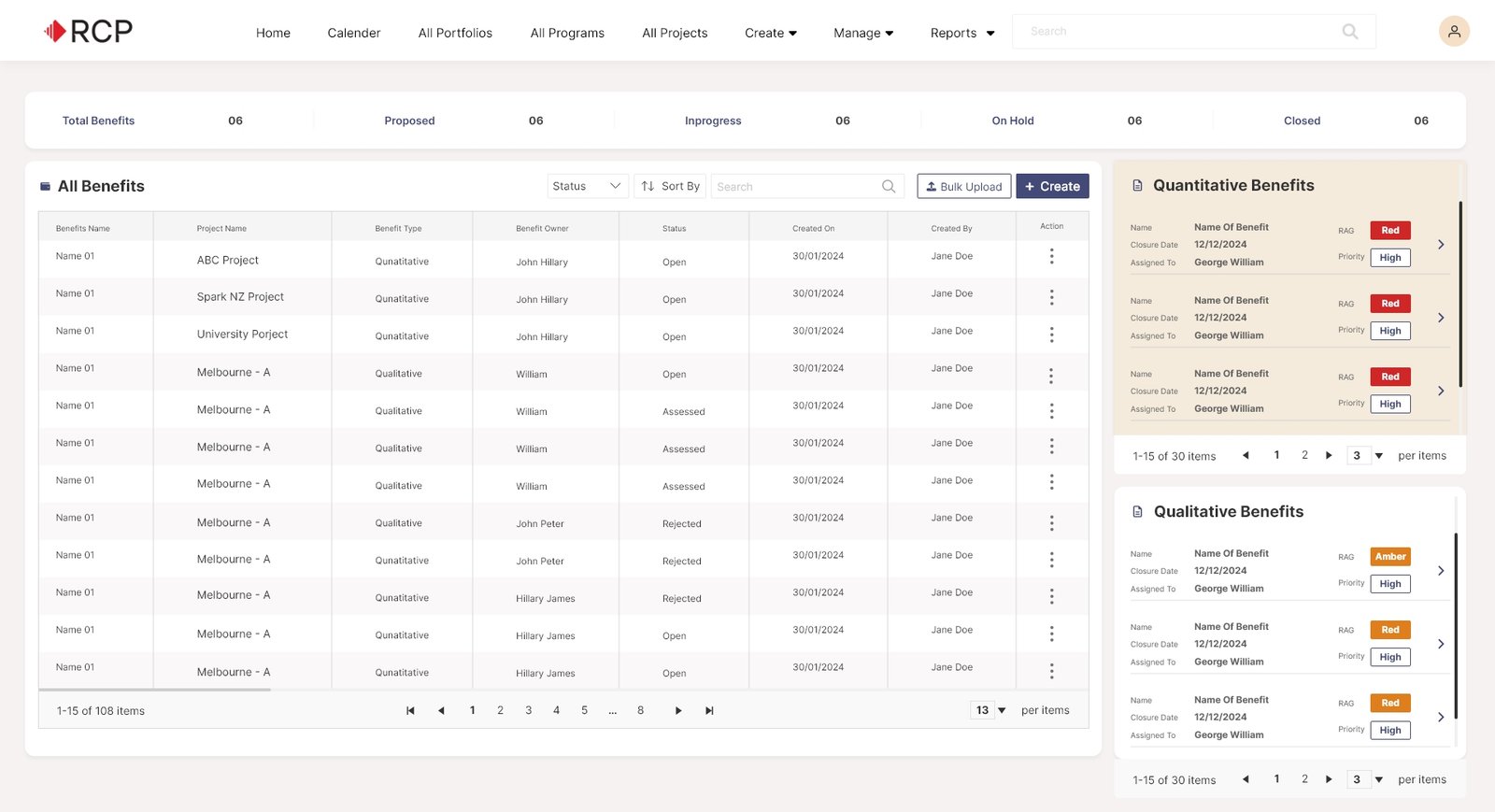
Balancing dense enterprise tables with actionable insights.
Quantitative and qualitative benefit tracking with synchronized detail panels, filters and enterprise-scale data tables.
RISK MANAGEMENT
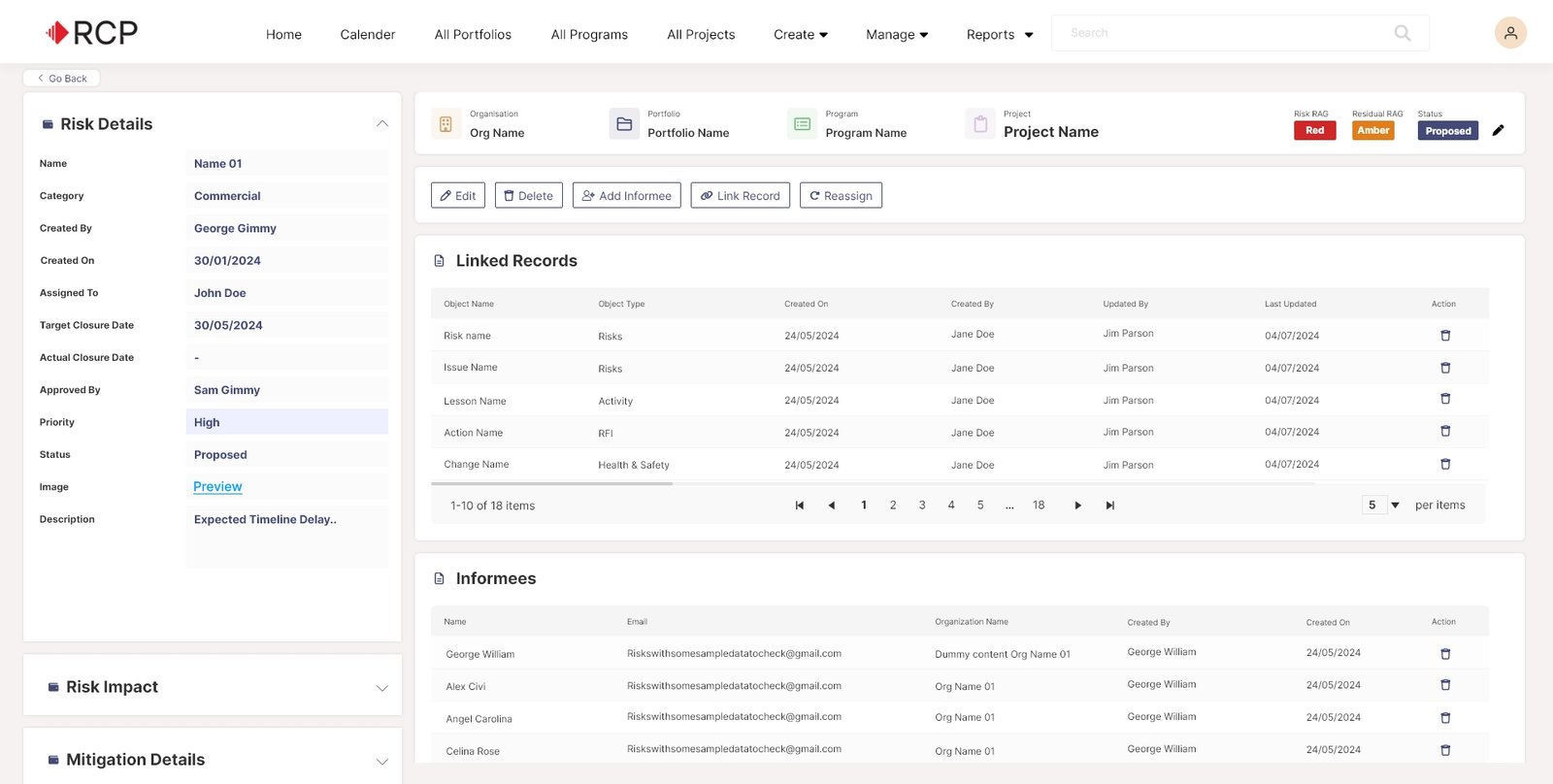
Making critical operational data easier to navigate.
The risk workspace separates contextual information, linked records, informees and mitigation workflows for faster enterprise decisions.
MY CONTRIBUTION
More than designing screens.
Product Discovery
Converted ambiguous business ideas into structured product requirements through research and stakeholder collaboration.
Design System
Extended Brane's existing component library to maintain visual consistency across enterprise modules.
Information Architecture
Designed relationships between portfolios, programs, projects, risks, benefits and operational workflows.
Cross-functional Collaboration
Worked closely with business analysts, developers and stakeholders from discovery through implementation.
CONCLUSION
RCP became the milestone that reshaped my product thinking.
Working within a restricted low-code ecosystem taught me that great UX is not created by unlimited freedom—it is created by bringing clarity to complex business systems. RCP remains one of the strongest learning experiences of my enterprise design career.